Water Pressure Diagnosis in Bridgeport, AL
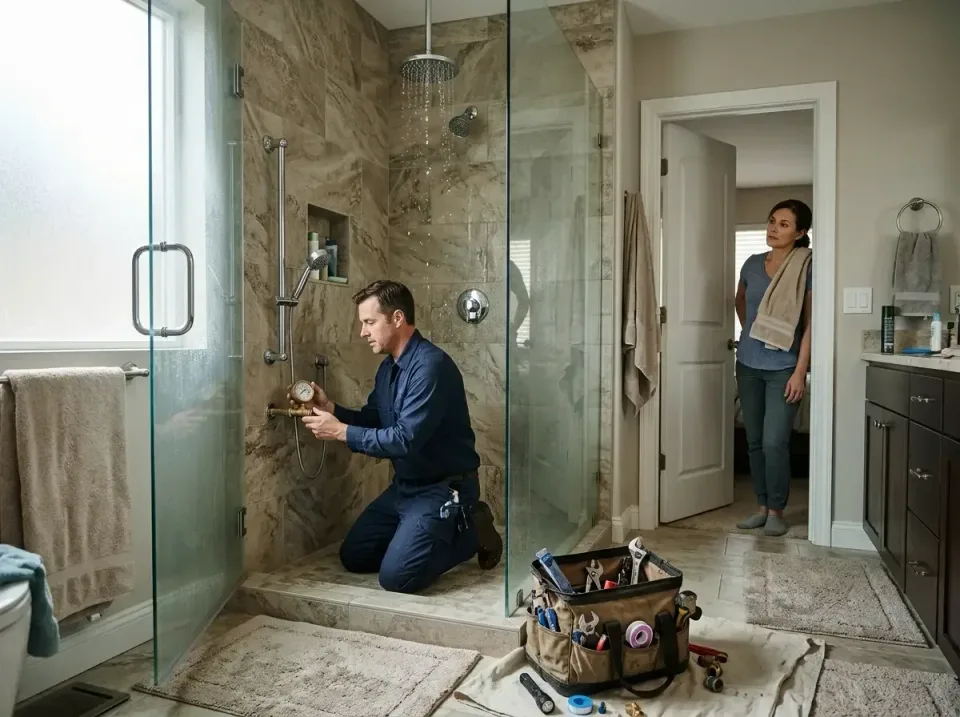
We test static and flowing pressure for homes; access and the number of test points shape a typical $90–$200 diagnostic visit.
Along the Tennessee River, Bridgeport homes can have very different plumbing access and water setups. In Battery Hill and Summer Bluff, our team starts by checking where pressure drops rather than replacing parts on a guess.
Hot, humid summers can mean more indoor water use, so a weak shower or a kitchen faucet that barely trickles becomes noticeable during busy household routines. Heavy rainfall can also raise groundwater around wells; for private-well owners, that makes it useful to note whether pressure changed after a wet spell and whether the pump is cycling differently. Near the Bridgeport Depot, we can test pressure at more than one fixture and explain what the readings show before recommending a repair.
We handle low pressure across Bridgeport, from an isolated fixture problem to a drop affecting the whole house. Our crew checks the likely source, explains the options in plain language, and completes only the work you approve.
We test static and flowing pressure for homes; access and the number of test points shape a typical $90–$200 diagnostic visit.
We repair residential booster pumps, checking pump controls and connections; repair costs depend on pump size, parts, and access, with many jobs around $150–$500.
We trace sudden pressure loss for homeowners, checking household supply and connections; storm interruption near Point Mallard Park or Toomer's Corner can affect pumps and systems.
We install residential booster pumps sized for the system; typical projects run $800–$2,500, depending on pump capacity and electrical work.
We clear showerhead restrictions and address weak flow; typical repairs run $150–$500, depending on access and parts. Southern Bridgeport, AL winters are mild, but summer irrigation can strain household use.
We restore weak well pressure for homeowners, checking pump controls and pressure equipment; typical repairs run $150–$1,200, depending on parts and well access.
We repair leaking home water lines, including buried sections; typical jobs run $300–$2,000, driven by leak location and excavation access.
Hot-water flow repairs for homes, including checks of heater connections and hot-side piping; scope and access shape the job cost.
Clogged water pipe repair clears debris and scale from residential lines; typical jobs run $150–$600, depending on pipe access and blockage severity.
We repair or replace residential pressure tanks, including tank and piping work; replacement commonly runs $500–$1,500, depending on tank capacity and piping access.
We repair or replace residential pressure regulators, including brass valves; typical work runs $250–$700 depending on valve size and labor. Nearby Bellingrath Gardens and Home, Bryant-Denny Stadium, and Chewacla Stat...
We repair whole-house filter housings, seals, and cartridge connections; Chewacla, the Tennessee Valley Museum of Art, and the University of Bridgeport, AL help orient statewide service.
Well pump repairs for homeowners cover pump and control issues; typical jobs run $250–$1,200, depending on equipment access and parts.
Bridgeport City Park sits beside the Tennessee River, where river-adjacent properties can present different plumbing access than homes farther from the water. High humidity can also speed corrosion on exposed plumbing. Insulating pipes in crawlspaces and exterior walls helps limit cold-weather exposure.
Our team checks the affected fixtures and water source, explains what we find, and reviews the repair before work begins. We respect your home and schedule, and our insured and bonded service operations support careful work.
A shower that weakens when a toilet flushes, a faucet that barely trickles, or a house-wide pressure drop calls for a different check. At homes near Bridgeport City Park, our crew identifies whether the trouble affects one fixture or the whole supply before choosing a repair. You can safely compare two faucets and note whether both weaken at the same time.
Severe storms can interrupt well pumps and booster systems, while brief outages during thunderstorms may leave those systems temporarily without power. Summer heat can increase evaporation and outdoor irrigation demand; on a private well, that added use may make a low-yield period more apparent.
We check the water source and system behavior before recommending repair, pump work, or a pressure adjustment. Service coverage includes ZIP code 35740.
Spring storms may cause localized flooding; at a Bridgeport property, note whether pressure changed after flooding or heavy rain, then tell our crew what you observed. Do not assume rainfall alone identifies the fault.
The Tennessee River gives this town a clear local reference, but a pressure tank still needs a direct check. A weak flow or a pump that runs often can point to a tank issue, among other causes.
We inspect the system and explain whether tank repair fits the evidence; homeowners can note when the pump starts and stops without opening equipment. Bring in our team when low pressure persists or affects several fixtures.
Before pump troubleshooting in Bridgeport, confirm whether the property uses public water or a private well; the source determines which parts of the system our crew needs to examine. Skipping a required permit or inspection can leave work unreviewed and create problems when the plumbing is serviced again.
The EPA Lead and Copper Rule concerns public water systems, not a blanket approval for household repairs. The Alabama Department of Environmental Management oversees environmental matters, including relevant septic-system requirements; it is not a substitute for checking plumbing rules. At a Bridgeport home, we explain the requirements that apply to the agreed work and help keep the repair properly documented.
Alabama Plumbing Pros traces pressure problems to their source and explains the work plainly.
The team checks fixtures, supply lines, pumps, tanks, and regulators. Experience with older pipes and rural well systems helps narrow down possible causes instead of defaulting to equipment replacement.
Appointments are coordinated from Montgomery, with travel time allowed for service across Alabama. That planning helps set practical expectations for reaching Bridgeport and nearby rural communities.
Air sputtering from a faucet can be an early clue that water delivery is inconsistent. Notice whether it happens at one fixture or several, and share that detail when discussing the system.
Pressure that rises and falls while a single fixture runs is worth noting. Track whether the change happens repeatedly and whether it affects only that fixture, so the technician has useful context.
A fixture that takes a while to return to its usual flow after another tap is closed may signal changing supply conditions. Note when it happens and which fixtures are involved.
Spring is a useful time to check pressure if household water use changes or fixtures have sat unused. A technician can assess the accessible system and help identify whether a fixture or broader supply issue needs attention.
Summer routines can put changing demands on household water use. If flow seems inconsistent during everyday tasks, a pressure check can help clarify whether the issue involves fixtures, supply lines, or system equipment.
Fall offers a chance to address pressure concerns before cooler valley weather arrives. A technician can inspect accessible components and discuss any needed repairs based on the system’s condition.
Cool valley winters make reliable household water useful for daily routines. If pressure changes during colder weather, a technician can check the system and explain whether the cause points to a fixture, line, pump, tank, or regulator.
Permit requirements can depend on the work and local rules. Ask who checks whether a permit applies and how that requirement is handled, so responsibilities are clear before any work begins.
The team schedules from Montgomery and travels across Alabama, including rural communities. Ask how travel time affects the appointment window and how you will be updated if scheduling needs to change.
A pressure concern can involve fixtures, supply lines, pumps, tanks, or regulators. Clarify which checks are included in the proposed scope and whether any additional assessment would be discussed separately.
Clear access to fixtures, shutoff valves, and relevant equipment can help the technician inspect the system. Ask which areas need to be reachable so you can prepare without moving items unnecessarily.
Understanding the proposed scope and terms helps you make an informed decision. Ask how the diagnosis, repair options, and any agreed work will be documented before authorizing the job.
Request a quote online or contact our Bridgeport, AL team directly by phone or email.
If both fixtures lose flow at once, the issue may affect the shared supply rather than the shower alone. Our team checks pressure at multiple fixtures and traces the drop before recommending work. You can note which fixtures are running when the shower weakens.
Compare a few fixtures and note whether the change affects hot and cold water or only one side. If the home uses a well, tell us that when scheduling so we can confirm the water source before troubleshooting. Avoid opening pump or electrical equipment.
Heavy rain can raise groundwater around wells, but that observation alone does not identify the cause of low pressure. Note when the pressure changed and whether the pump cycles differently; our crew can inspect the system and explain the findings.
Low Water Pressure Repair is also available in these nearby communities across Alabama.