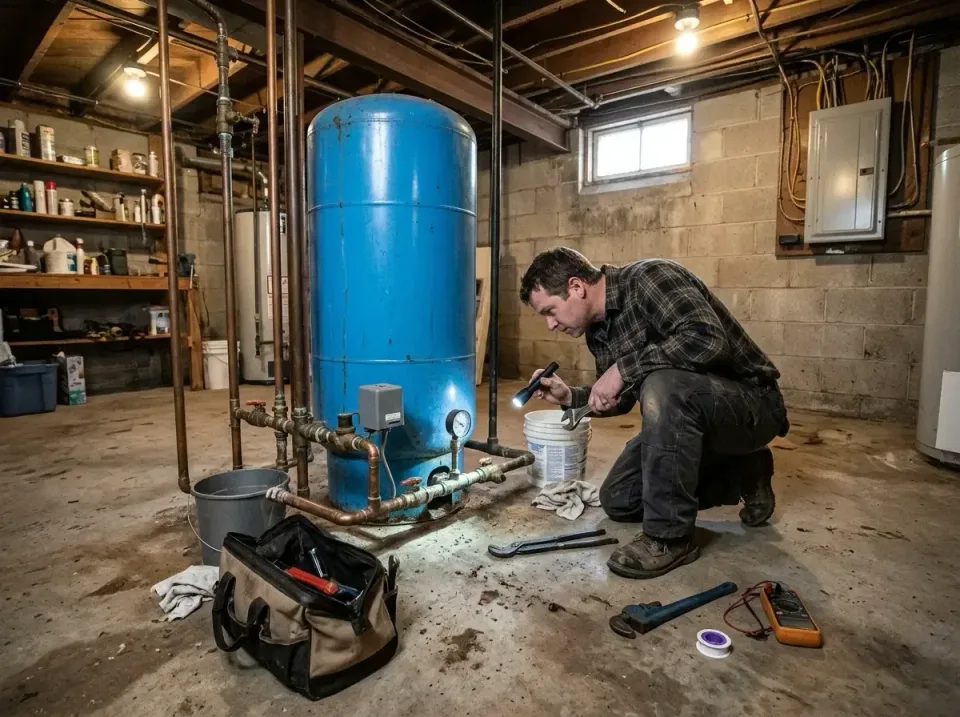
Water Pressure Diagnosis
We test static and flowing pressure for homes; access and the number of test points shape a typical $90–$200 diagnostic visit.
When pressure falls throughout the house, check several fixtures and identify whether the home uses municipal water or a private well before replacing equipment. A kitchen faucet that barely trickles and an upstairs shower that weakens point to different possible restrictions than one isolated fixture. Start by noting which taps are affected and whether the change is constant or occurs during use.
Alabama rainfall varies between coastal and inland communities, so private-well conditions are not identical across the state; note recent changes and share them during troubleshooting. Near Montgomery’s Alabama Shakespeare Festival, a house-wide drop still needs a measured diagnosis, not a guess based on location.
At Bellingrath Gardens and Home in Theodore, outdoor water demand is part of the setting; at home, record whether indoor fixtures have changed too. Small clues matter. Our crew uses those observations to focus testing before recommending a repair.
If the shower turns weak when toilets flush, or several rooms lose flow at once, check more than one fixture before assuming the main line is at fault. Open a kitchen tap, a bathroom faucet, and a shower separately; write down which ones are affected and whether the problem is stronger upstairs. A single slow faucet may have a clogged aerator or partly closed fixture shutoff, while a broad drop calls for checks closer to the supply.
Record whether hot and cold water behave differently. If only hot flow is weak, the issue may be near the heater or hot-side piping rather than the home’s incoming supply.
Our crew treats that distinction as useful evidence, not a reason to swap parts. In Montgomery, a home near the Alabama State Capitol still needs the same fixture-by-fixture checks before a diagnosis can be made.
Compare a gauge reading with fixtures closed to one taken while a tap is running. The first is static pressure; the second is dynamic pressure, which can reveal a pressure drop under demand that a no-flow reading will miss.
Residential pressure commonly measures 40–60 psi, and readings below 40 psi may feel weak. A reading above 80 psi can stress plumbing, so do not try to raise pressure without understanding the system.
Hot, humid summers increase indoor water use, and several fixtures running together can make a marginal supply issue more noticeable. At the USS Alabama Battleship Memorial Park in Mobile, the local climate and visitor setting differ from a home’s plumbing conditions; inside a house, note which appliances or taps were running when the flow changed. We use an accessible test point and compare readings rather than relying on how a shower feels alone.
For a private well, note whether the pump runs unusually often, starts and stops rapidly, or fails to restore flow after use. Severe storms can interrupt well pumps and booster systems, so after a power interruption, check whether other electrical equipment is operating before concluding that the pump itself has failed. Do not open a pump control box or handle live wiring.
A pressure tank stores water under pressure, while the well pump moves it into the system; a failing tank, pump, or control can cause similar symptoms. Southern Alabama winters are generally milder, but that does not rule out equipment or supply trouble.
Near Birmingham-Shuttlesworth International Airport, as elsewhere, we confirm whether the property has a well or municipal supply before choosing the test path. For a more specific well-system symptom, see signs a Franklin Electric pump may need repair.
A homeowner can clean a faucet aerator, make sure an accessible fixture shutoff is fully open, and ask whether utility work recently occurred. Stop there if multiple fixtures remain weak, a gauge reading is far outside the expected range, a leak is suspected, or the well pump cycles constantly. Avoid adjusting a pressure-reducing valve or changing pump controls by guesswork; excess pressure can damage plumbing, and electrical work around a pump carries risk.
Coastal Alabama faces tropical storm and storm-surge risks, so after severe weather, note visible water intrusion and any change in pump operation before arranging service. We diagnose the supply, regulator, pump, tank, and piping as applicable, then explain the findings in plain language. A water pressure diagnosis can help separate a fixture restriction from a system-wide fault before repair work is agreed.
The right repair depends on whether the restriction is at one fixture, the supply, or well equipment. Northern Alabama experiences occasional hard freezes, so include exposed hose bibs and pipe sections in a visual check if low flow began after freezing weather. Protect them; a burst connection can add a leak to the pressure problem.
| Option | Best for | Key detail |
|---|---|---|
| Municipal supply pressure repair | Multiple fixtures affected on utility water | Test static and flowing pressure to see whether demand causes a drop. |
| Private well pressure repair | Low flow with pump or tank symptoms | The pump moves water; the pressure tank stores it. |
| Water pressure regulator repair | Low or unstable pressure near the house supply | A regulator limits incoming pressure; it does not boost it. |
| Booster pump installation | A verified supply issue needing added system pressure | Booster pumps are commonly 1/2–2 horsepower. |
| Clogged pipe or fixture repair | One tap or branch has weak flow | A faucet aerator restriction differs from a blocked supply pipe. |
The University of Alabama in Tuscaloosa is a familiar regional reference, but the home’s actual readings not its location determine which option fits.
A few observations help us test the right part of the system on arrival. Heavy rainfall can raise groundwater around wells, so if your property uses a well, note whether the pressure change followed a period of heavy rain; do not assume that rain alone explains it. A pump’s history and the home’s readings still matter.
List affected fixtures: Record whether hot, cold, upstairs, and downstairs taps have weak flow.
Note the timing: Write down when the change began and whether it occurs during simultaneous water use.
Identify the source: Confirm whether the home uses municipal water or a private well.
Clear access: Move stored items away from the main shutoff, pressure tank, and pump without opening electrical equipment.
Share recent work: Tell the technician about plumbing or utility work that could affect the supply.
Around Bryant-Denny Stadium in Tuscaloosa, as at any home, clear notes help distinguish a local fixture issue from a wider problem. Chewacla State Park in Auburn is another local landmark; for a property near there, as elsewhere, safe access to the home’s equipment is more useful than guesswork.
If pressure drops throughout your home after a storm, note any power interruption and whether a well pump or booster stopped operating. Spring storms may cause localized flooding, so report water around well equipment and avoid opening electrical controls.
Water pressure diagnosis is typically $75–$250, with testing and access affecting the work. For example, a technician needs room to reach the test point and equipment; ask Alabama Plumbing Pros for a quote based on the property.
Yes, you can clean a faucet aerator and record which fixtures are affected, but leave pump wiring, regulator adjustments, and suspected hidden plumbing leaks to a professional. Summer heat increases evaporation and outdoor irrigation demand, so note whether irrigation use coincides with the pressure change.
For regulated plumbing work, use a contractor who meets Alabama plumbing contractor license requirements; permit rules can depend on the location and scope. Alabama Plumbing Pros can discuss the job and applicable requirements before work is agreed.
Yes, a hidden plumbing leak can reduce available flow, especially when several fixtures are weak or you notice unexplained moisture. A home near Gulf Shores Public Beach should not assume coastal conditions prove a leak; residential plumbing service can inspect the system and identify whether hidden plumbing leak detection is needed.
If water pressure dropped throughout the house, compare several fixtures and note whether flow changes between hot and cold or while other water is running. Ask a property manager to share any recent work or outage information if you rent; that detail can prevent duplicate troubleshooting.
A pump that will not run normally or a suspected hidden leak needs professional assessment. Don’t keep testing electrical parts yourself.
Near Downtown Opelika, our service planning depends on clear access and accurate symptom notes, not assumptions about a particular neighborhood. Frequent thunderstorms can bring brief power outages, and severe weather can affect well pumps or booster systems; mention any outage that coincided with the change.
Alabama Plumbing Pros has served Alabama for more than 11 years, diagnosing before recommending parts. For a measured evaluation, contact us about low water pressure repair or call (877) 773-0781.
If pressure drops throughout your home after a storm, note any power interruption and whether a well pump or booster stopped operating. Spring storms may cause localized flooding, so report water around well equipment and avoid opening electrical controls.
Water pressure diagnosis is typically $75–$250, with testing and access affecting the work. For example, a technician needs room to reach the test point and equipment; ask Alabama Plumbing Pros for a quote based on the property.
Yes, you can clean a faucet aerator and record which fixtures are affected, but leave pump wiring, regulator adjustments, and suspected hidden plumbing leaks to a professional. Summer heat increases evaporation and outdoor irrigation demand, so note whether irrigation use coincides with the pressure change.
For regulated plumbing work, use a contractor who meets Alabama plumbing contractor license requirements; permit rules can depend on the location and scope. Alabama Plumbing Pros can discuss the job and applicable requirements before work is agreed.
Yes, a hidden plumbing leak can reduce available flow, especially when several fixtures are weak or you notice unexplained moisture. A home near Gulf Shores Public Beach should not assume coastal conditions prove a leak; residential plumbing service can inspect the system and identify whether hidden plumbing leak detection is needed.
Browse all nationwide service options and choose the right fit for your project.
We test static and flowing pressure for homes; access and the number of test points shape a typical $90–$200 diagnostic visit.
We repair residential booster pumps, checking pump controls and connections; repair costs depend on pump size, parts, and access, with many jobs around $150–$500.
We trace sudden pressure loss for homeowners, checking household supply and connections; storm interruption near Point Mallard Park or Toomer's Corner can affect pumps and systems.
We install residential booster pumps sized for the system; typical projects run $800–$2,500, depending on pump capacity and electrical work.
We clear showerhead restrictions and address weak flow; typical repairs run $150–$500, depending on access and parts. Southern Alabama winters are mild, but summer irrigation can strain household use.
We restore weak well pressure for homeowners, checking pump controls and pressure equipment; typical repairs run $150–$1,200, depending on parts and well access.
We repair leaking home water lines, including buried sections; typical jobs run $300–$2,000, driven by leak location and excavation access.
Hot-water flow repairs for homes, including checks of heater connections and hot-side piping; scope and access shape the job cost.
Clogged water pipe repair clears debris and scale from residential lines; typical jobs run $150–$600, depending on pipe access and blockage severity.
We repair or replace residential pressure tanks, including tank and piping work; replacement commonly runs $500–$1,500, depending on tank capacity and piping access.
We repair or replace residential pressure regulators, including brass valves; typical work runs $250–$700 depending on valve size and labor. Nearby Bellingrath Gardens and Home, Bryant-Denny Stadium, and Chewacla Stat...
We repair whole-house filter housings, seals, and cartridge connections; Chewacla, the Tennessee Valley Museum of Art, and the University of Alabama help orient statewide service.
Well pump repairs for homeowners cover pump and control issues; typical jobs run $250–$1,200, depending on equipment access and parts.
Select a city to find local low water pressure repair providers we cover in Alabama.
Share your job scope for low water pressure repair in Alabama — we will review fit and pricing before scheduling.