Water Pressure Diagnosis
We test static and flowing pressure for homes; access and the number of test points shape a typical $90–$200 diagnostic visit.
When hot water runs weak but cold water flows normally, the problem is often near the heater or in the hot-water piping. If both hot and cold sides are weak, the cause may be farther upstream. Start by comparing several fixtures, not by replacing the heater.
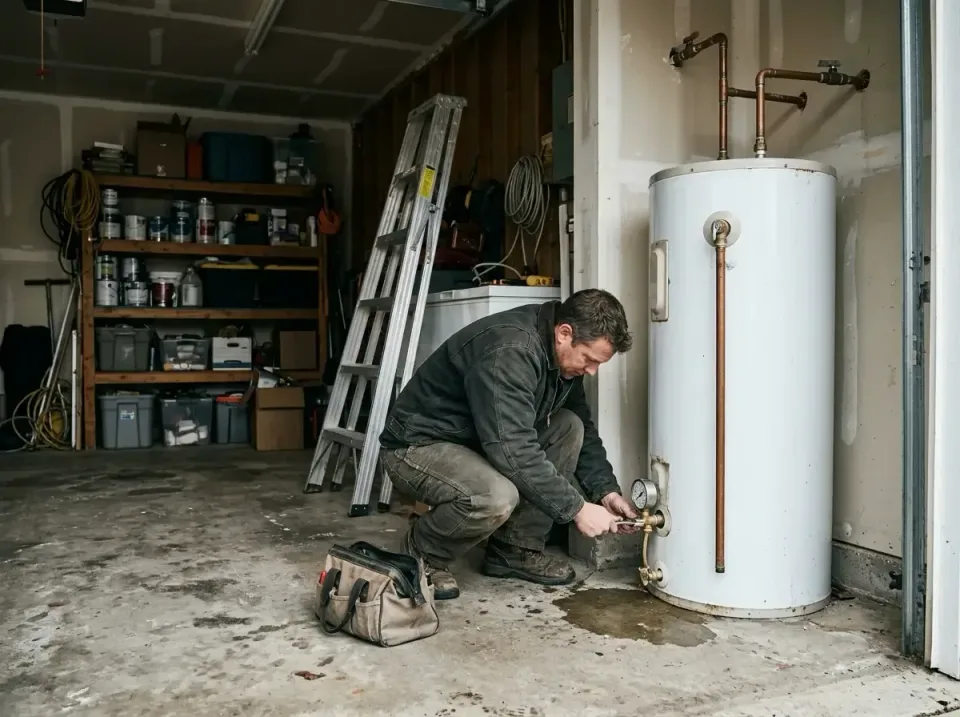
An inline pressure test gauge can help a technician compare readings at accessible points and see whether pressure changes along the hot-water route. That evidence narrows the search.
Alabama’s hot, humid summers can mean more indoor water use, so a gradual restriction may become more noticeable during busy household routines. Near the Alabama State Capitol in Montgomery, our crew traces the symptom before proposing a repair. Ask whether the line can be isolated and tested before any pipe is replaced.
When a kitchen or shower has weak hot flow but its cold side is normal, first suspect a restriction in the heater connections or hot-water line. If hot and cold flow are both poor at several fixtures, the issue may involve the home’s supply instead. We compare more than one fixture and note whether the symptom changes with use. A single faucet can mislead you.
A pressure regulator controls incoming water pressure; a malfunction can affect both hot and cold water rather than only one side. Alabama’s occasional freezing nights can burst exposed pipes and hose bibs, so inspect visible plumbing for damage if a sudden loss follows a cold snap.
Do not assume a heater is at fault just because the symptom is easiest to notice in a shower. Our crew uses the pattern across fixtures to choose the next test, instead of swapping parts on a hunch.
A pipe blockage can restrict hot flow while leaving cold flow apparently normal, especially when the affected branch serves only certain fixtures. Scale buildup inside older piping can narrow the passage over time; the result may be a slow decline rather than a dramatic failure. Affected fixtures and the age or material of visible pipe help guide the inspection, but they do not prove the cause on their own.
We take static and dynamic pressure readings: one with water off, another while a fixture is running. A sharp drop under flow points toward a restriction or supply limitation that a resting reading could miss.
The Alabama State Capitol provides a familiar Montgomery reference point, but the diagnosis depends on measurements inside the home, not the building’s location. If water appears rusty or discolored, ask about water quality sampling before deciding that pipe material alone explains the change.
You can safely compare hot and cold flow at several faucets and remove a faucet aerator for cleaning if you are comfortable doing so. If only one fixture is affected, that simple check may identify a screen clogged with debris.
Stop if a valve is seized, a connection leaks, or the problem involves opening the heater or cutting into pipe. Those steps can create a scalding, leak, or water-damage hazard.
Call a professional when multiple hot fixtures are weak, the drop appeared suddenly, or a visible pipe is leaking. Our team identifies the likely source, explains the repair options, and protects the work area before proceeding.
For a related symptom affecting the whole house, see what to check when water pressure drops throughout an Alabama home. A separate cold-water problem may call for a different investigation; this article focuses on the hot side.
We compare flow at fixtures near and farther from the heater, then check accessible connections and isolation points. If hot flow is poor throughout the home but cold flow is steady, the pattern focuses attention on the heater outlet, nearby valves, or the hot-water distribution piping.
If just one branch is affected, that branch deserves closer inspection. No single gauge reading tells the whole story.
Our process is to isolate the likely section before recommending pipe work. Water quality sampling can add useful evidence when discoloration or sediment accompanies low flow, while pressure readings help show whether the problem worsens under demand.
We explain what the tests indicate in plain language and outline the next repair step before work begins. That keeps a restricted pipe from being mistaken for a failed heater and avoids replacing equipment without evidence.
The right check depends on whether weak flow is limited to one fixture, several hot fixtures, or the whole home. Flow-rate testing at multiple fixtures helps reveal whether the restriction follows one branch or appears more broadly; the results guide the next inspection rather than proving a cause by themselves. In Birmingham, Vulcan Park and Museum is a familiar landmark, while hot, humid summers can increase household water use and make an existing restriction easier to notice.
| Option | Best for | Key detail |
|---|---|---|
| Fixture flow check | One weak faucet or shower | Compare hot and cold sides |
| Multi-fixture flow test | Several affected rooms | Tests more than one outlet |
| Pipe camera inspection | Suspected accessible blockage | 1/2-inch camera head |
| Regulator adjustment | A confirmed regulator issue | Stay within manufacturer limits |
Before scheduling, note which fixtures have weak hot flow and whether the cold side works normally. Heavy rainfall can raise groundwater around wells, so if your home uses a well, mention recent rain and any changes in water service; those details help frame the visit without assuming the well is the cause.
Alabama rainfall differs between coastal and inland areas, which can make local water conditions worth discussing. Keep it simple.
Record symptoms: List affected fixtures and when the hot-water pressure changes.
Compare sides: Check hot and cold flow at the same faucet without dismantling plumbing.
Identify the source: Tell the technician whether the home uses municipal water or a private well.
Clear access: Move stored items away from the heater and nearby visible piping.
Protect the area: Keep floors clear and point out finished surfaces near likely inspection access.
Share recent changes: Mention plumbing work, utility interruptions, or any new leak signs.
A rain-related change on a private well may be worth checking, because heavy rainfall can raise groundwater around wells and affect the conditions around the water source. Tell the technician when the pressure changed and whether other fixtures or the cold side are affected; Downtown Huntsville is a local reference, not a diagnosis.
Pressure diagnosis is typically $75–$250, with testing and access affecting the work involved. A technician can compare fixtures and readings before recommending a repair, so ask what access is needed and what the diagnostic visit includes.
Yes, you can compare hot and cold flow and clean an accessible faucet aerator, but do not open the heater or cut into a pipe if you are unsure. Call Alabama Plumbing Pros when several hot fixtures are affected or you find a leak; drought periods can reduce private well yield, which is another detail to report.
Alabama plumbing contractor license requirements apply to plumbing work, and the Alabama State Board of Plumbing and Gas Fitters is a relevant place to verify contractor standing. For regulated work in Montgomery, check applicable permit requirements before work begins; Alabama Plumbing Pros can explain the planned scope and licensing details.
A booster pump raises system water pressure, so it is not automatically the answer when only one faucet has weak hot flow; a fixture or branch restriction may be more likely. Insulating pipes in crawlspaces and exterior walls can help protect exposed plumbing, while Flotec is a pump brand to identify if that equipment is already installed.
If hot water is weak at several fixtures while cold flow seems normal, ask for a diagnosis before replacing the heater or opening a wall. A measured flow-rate test helps distinguish a local fixture issue from a broader restriction, and careful protection of finished spaces matters whenever inspection requires indoor access.
If testing points to a system that needs more pressure, a booster pump installation may be considered only after the cause and system suitability are checked. Around Downtown Mobile, as elsewhere in Alabama, hot-water symptoms deserve a measured approach rather than guesswork.
Tell us which fixtures are affected and what changes you have noticed. Contact Alabama Plumbing Pros to discuss Low Hot Water Pressure Repair.
A rain-related change on a private well may be worth checking, because heavy rainfall can raise groundwater around wells and affect the conditions around the water source. Tell the technician when the pressure changed and whether other fixtures or the cold side are affected; Downtown Huntsville is a local reference, not a diagnosis.
Pressure diagnosis is typically $75–$250, with testing and access affecting the work involved. A technician can compare fixtures and readings before recommending a repair, so ask what access is needed and what the diagnostic visit includes.
Yes, you can compare hot and cold flow and clean an accessible faucet aerator, but do not open the heater or cut into a pipe if you are unsure. Call Alabama Plumbing Pros when several hot fixtures are affected or you find a leak; drought periods can reduce private well yield, which is another detail to report.
Alabama plumbing contractor license requirements apply to plumbing work, and the Alabama State Board of Plumbing and Gas Fitters is a relevant place to verify contractor standing. For regulated work in Montgomery, check applicable permit requirements before work begins; Alabama Plumbing Pros can explain the planned scope and licensing details.
A booster pump raises system water pressure, so it is not automatically the answer when only one faucet has weak hot flow; a fixture or branch restriction may be more likely. Insulating pipes in crawlspaces and exterior walls can help protect exposed plumbing, while Flotec is a pump brand to identify if that equipment is already installed.
Browse all nationwide service options and choose the right fit for your project.
We test static and flowing pressure for homes; access and the number of test points shape a typical $90–$200 diagnostic visit.
We repair residential booster pumps, checking pump controls and connections; repair costs depend on pump size, parts, and access, with many jobs around $150–$500.
We trace sudden pressure loss for homeowners, checking household supply and connections; storm interruption near Point Mallard Park or Toomer's Corner can affect pumps and systems.
We install residential booster pumps sized for the system; typical projects run $800–$2,500, depending on pump capacity and electrical work.
We clear showerhead restrictions and address weak flow; typical repairs run $150–$500, depending on access and parts. Southern Alabama winters are mild, but summer irrigation can strain household use.
We restore weak well pressure for homeowners, checking pump controls and pressure equipment; typical repairs run $150–$1,200, depending on parts and well access.
We repair leaking home water lines, including buried sections; typical jobs run $300–$2,000, driven by leak location and excavation access.
Hot-water flow repairs for homes, including checks of heater connections and hot-side piping; scope and access shape the job cost.
Clogged water pipe repair clears debris and scale from residential lines; typical jobs run $150–$600, depending on pipe access and blockage severity.
We repair or replace residential pressure tanks, including tank and piping work; replacement commonly runs $500–$1,500, depending on tank capacity and piping access.
We repair or replace residential pressure regulators, including brass valves; typical work runs $250–$700 depending on valve size and labor. Nearby Bellingrath Gardens and Home, Bryant-Denny Stadium, and Chewacla Stat...
We repair whole-house filter housings, seals, and cartridge connections; Chewacla, the Tennessee Valley Museum of Art, and the University of Alabama help orient statewide service.
Well pump repairs for homeowners cover pump and control issues; typical jobs run $250–$1,200, depending on equipment access and parts.
Select a city to find local low water pressure repair providers we cover in Alabama.
Share your job scope for low water pressure repair in Alabama — we will review fit and pricing before scheduling.